
Popular Categories

Politics

Geo Economics

Lifestyle

Analysis

Geopolitics

Civilizational Lens

Defence

A day. A week. A month. Washington still can't say how long this fight goes on
9 Jul 2026
Created by
The BV Team
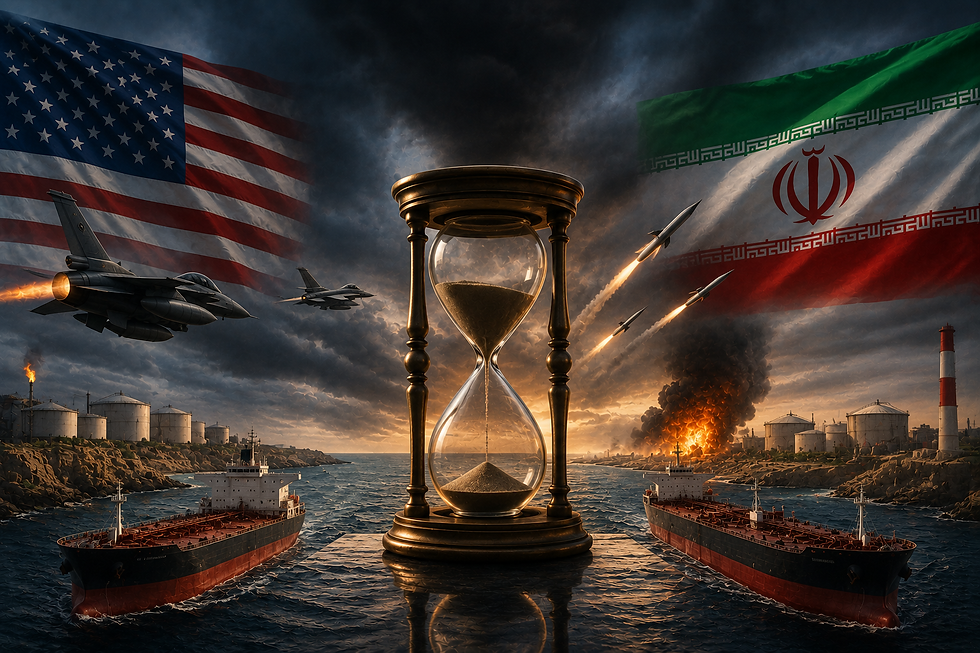
There are three words in Washington these days that are doing a lot of work.There are three words in Washington that are doing a lot of work these days. If you ask a White House official how much time the next round of firing in the Strait of Hormuz with Iran is going to last, the answer will be, on background to reporters this week, that nobody knows. May take 2 or 3 days to wrap up. It may run for a week without stopping. This may last for a whole month. Whether Iranian forces continue making attacks on commercial shipping in one of the world's vital waterways or whether they ease up and let the recent calm prevail, is all up to Tehran, officials say.
Such a general response would shake markets off the tree. It follows a ceasefire agreement which President Trump himself called "over" earlier this week, and it comes as confirmation of what traders and diplomats have suspected all along that the truce agreed to last month was not a solution, but a temporary pause with an expiration date that no one had taken the time to record.
The immediate reason was routine and menacing Tuesday's attack on three cargo ships passing through the strait, shortly followed by a second, more significant salvo of strikes by the Americans that for the first time in months targeted infrastructure within Iran itself as well as naval vessels in the Gulf. The campaign is aimed at defending freedom of navigation, and Wednesday's strikes will exceed those of Tuesday, U.S. Central Command said. Meanwhile, the Treasury Department eliminated a waiver that let Iran continue to sell oil to the international market, one of Washington's larger concessions in the interim deal, that it had previously granted.
Instead of being conciliatory, Iran's reaction has been defiant. Iran's chief negotiator accused the United States of bullying and breaking its promises and warned that the strait would be re-opened under Iran's conditions, meanwhile, threatening a counter-attack if the U.S. launched an attack. That body language stance belligerent in front of the world and backchannel negotiating signals friendly has been a recurring theme in this conflict. Trump has gone from calling Iranian leaders "scum" to telling reporters on Air Force One a few hours later that Iran's leaders had called off to make a deal.
The one thing that's different this time is the confidence that emanates from within the administration on how much room it has to continue to escalate. But officials cite a straightforward, largely ignored reality: Hundreds of oil tankers have already exited the Gulf through the strait in recent weeks, thereby alleviating concern that a fresh eruption would quickly cause a spike in energy costs as it did a few months ago. Trump said as much in his own words at the NATO meeting in Ankara, saying the oil surplus during quieter times provides Washington with time to attack Iran more aggressively but without the typical economic repercussions.
Markets are not fully convinced and the price action over the last three days bears this out. Brent crude rose more than five percent on Wednesday to end above seventy-eight dollars a barrel, the largest one-day percentage jump since early May, but eased back after Thursday as traders digested the overnight strikes. The west Texas intermediate also had a similar path, rallying to more than seventy-three dollars and then falling. Prices for heating oil, a proxy for jet fuel pricing, rose almost a tenth in the same period. None of that is theoretical for American consumers The national average price at the pump dropped from a high above four and a half dollars a gallon in May to under three-eighty by midweek, and has not moved since that time, according to AAA's tracking.
The stakes are high beyond the pump. Circulating in the Strait of Hormuz is about 20 percent of the world's oil and liquefied natural gas, and so far, the insurance industry is reacting: sources within the shipping industry report that some war-risk underwriters have advised their clients to suspend shipping voyages via the strait entirely, while others have changed the terms of their policies during the current crisis. There is a base case scenario outlined by Goldman Sachs if flows are to return by the end of July, sanctions are lifted and the shippers receive credible security guarantees, but the bank's own analysts admit that the risks are just as easily going away. In other parts of the energy industry, Russia's early response to the Ukrainian drone attacks on its refineries, which led it to ban diesel exports this week, is creating a second, unrelated strain on global fuel supply at a time when it is desperately needed.
There's another domestic controversy under all of this, as well. The War Powers Act has already been challenged once during the conflict, when the administration sent formal letters to Congress stating hostilities had "terminated" while sporadic strikes were still in progress, a legal argument that was accepted by but little but not everyone was happy with, leaving Congress's oversight function almost dormant. In the wake of renewed strikes, it is that same question that has been raised by a succession of open-ended escalations, each taken as a self-defense measure, which culminates in a "war" that needs to be voted on.
The current administration's working theory is that it can apply moderate and controlled pressure, for the purpose of making a point, without triggering a full-scale war, at a time when the oil market has improved its shock absorption capabilities. Whether the theory holds up after Iran's next move is all that matters, and even those who are running the policy don't know.