
Popular Categories

Politics

Geo Economics

Lifestyle

Analysis

Geopolitics

Civilizational Lens

Defence

Trump’s Iran Choice Is Now an Oil and Shipping Choice
29 Sept 2026
Created by
The BV Team
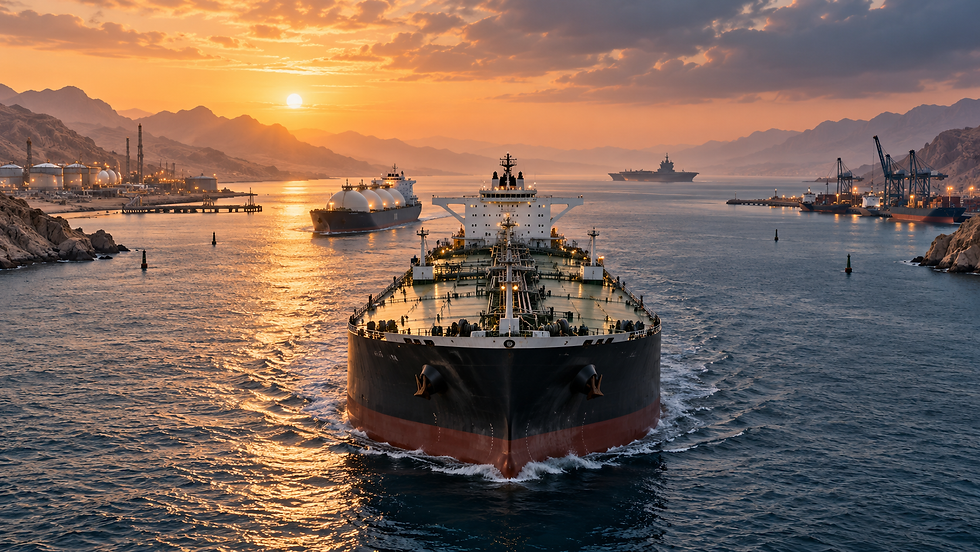
The world could be a little light on oil while an oil tanker is moving. The awkward reality of the new discussion about a deal between Washington and Tehran. Gulf producers have managed to get more oil onto vessels, but those lines are not only slower and more expensive, but also subject to the next disruptions. Tuesday's prices were in the vicinity of $105 a barrel for Brent and $92 a barrel of U.S. crude. Those prices speak more than any "victory" proclamation: seven months after the war began, businesses still can't plan for a safe trip through the region.
While indirect diplomacy attempts are being made, President Donald Trump has spurned Iran's proposal for a temporary truce. The price that is being worked out is simple to define and difficult to finish. Tehran is seeking to be relieved from the American naval blockade and the oil sanctions. Washington is seeking reliable passage in the Strait of Hormuz and assurances about Iran's nuclear ambitions. Both sides wish to make the first concession; neither can be trusted when ships set sail. The presence of a carrier doesn't prove that a new strike has been ordered, but it does make Washington's position stronger in the negotiations.
Iran's leaders know that uncertainty is a good thing. Mojtaba Khamenei's tone of defiant rhetoric on foreign forces and Iranian control at sea addresses the domestic audience as well as negotiators abroad. The term 'superpower' when used in reference to Iran is a political statement and not an indicator of its economic or military strength. The more pragmatic side of Tehran's argument is that it can put costs far beyond the borders of Iran. If the tanker arrives at Hormuz, then the owner has to consider the possibility of loss of crew lives, cargo loss and the next trip.
That's not something India can't do without. Higher crude prices impact the import bill, transportation expenses and home and factory price pressures. There's an additional exposure: Qatar-related LNG ships have started to make a resurgence in making transits through the Hormuz, and supply pledges are being tested. Even if the vessel movements pick up, it cannot be taken as a sure sign that a factory will be able to get fuel at a foreseeable price. The same doubt spills over to European buyers and Asian refiners, funneling a Gulf security issue into a contract versus freight and working capital question.
Saudi Arabia has helped mitigate that threat by exporting oil to the Red Sea. Its East–West pipeline has restarted operations, but a path through the town of Yanbu remains to be secured near the Red Sea. This is why Crown Prince Mohammed bin Salman reportedly was asking the United States to take action against the Houthis. Washington has given intelligence and targeting assistance but has refused the strikes. The difference might upset Riyadh, but it's a reality of American politics: A new campaign could preserve a shipping route, or fuel a conflict whose repercussions are increasingly global.
Abu Dhabi is doing its sum-and-sums. Despite the region's upheaval, His Majesty the President of the United Arab Emirates Sheikh Mohamed bin Zayed met with His Honourable Highness the Prime Minister of the State of Israel, Benjamin Netanyahu, to continue the direct diplomacy between the two governments. It does not mean that the UAE has accepted all Israeli offers on Iran. Nor is Saudi Arabia's own engagement with Washington to be interpreted as an indication of a unified Gulf policy. Preserving trade and security interests is UAE's responsibility and that of the Saudi oil infrastructure and Red Sea exit. Those interests intersect but not in the same way.
The murky affair at RAF Fairford illustrates how fast doubt can spin out of its control. Five men were arrested close to the British base and later put on bail by police. Investigators are still working on the case, but no viable explosives were reported in the vehicles and there is no reports of a foreign sponsor. Serious examination of the base security of the investigation and the results of that investigation, not confidence that the episode demonstrates Iran has opened a new front in Britain.
Moving further east, Pakistan faces the security issues in the same manner. The pressure on police and civilian administration is highlighted by recent deadly incidents, one of which was allegedly led by the Pakistani Taliban in KP, the province of the kingdom. More than anything else, they show no indication that the TTP has entrenched itself in the province of Sindh or that a military coup is imminent.
Similarly, Turkey's Intelligence chief İbrahim Kalın's visit to Afghanistan and Pakistan indicates that the country is engaged in security dialogue in the region. It does not give any weight to any claim that Turkey has betrayed Pakistan on the intelligence front regarding the IS. These theories can get top-tier attention, but it takes proof for governments and investors.
The economic standard for any Trump-Iran deal is tougher than a handshake or a week without strikes, therefore. Tankers should be able to pass over and over. Insurers need to be ready to accept them at viable premiums. Saudi export lines need to be more solid, and Qatar's gas shipments need to be more reliable to provide buyers with the basis for binding contracts. The terms of nuclear inspections and relief from sanctions must have the credibility of both sides after the cameras are gone. In the meantime, every new military advance and every diplomatic gesture will drive the price of the risk up and down, but none will put it to rest.
In India's case, it is obvious that it is sensible to maintain the flow of trade, ensure that space remains available to India to interact with all stakeholders and evaluate each of them based on their energy security implications. Strength slogans can't be the basis of the Gulf's management. What is more important is its actual power in the cost of safely transporting a barrel of oil from its producer to its customer.