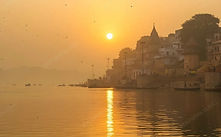
Beyond Religion: The Idea of a Living Civilization
When people attempt to define Hinduism, they often struggle—not because it lacks structure, but because it transcends conventional definitions of religion. Unlike systems built around a single prophet, a fixed book, or a centralized doctrine, Sanatan Dharma operates as a civilizational framework—a way of organizing life itself.

26 March 2026
The BV Team
When people attempt to define Hinduism, they often struggle—not because it lacks structure, but because it transcends conventional definitions of religion. Unlike systems built around a single prophet, a fixed book, or a centralized doctrine, Sanatan Dharma operates as a civilizational framework—a way of organizing life itself.
The word “Sanatan” means eternal. This is not symbolic language; it reflects a worldview that sees existence as cyclical, adaptive, and continuously evolving. Rather than prescribing a rigid path, it offers principles that can be lived, modified, and internalized across generations.
This is why it is better understood not as a “religion” in the narrow sense, but as a way of life embedded in time, geography, and daily human experience.
In many belief systems, rituals are central acts of faith—often performed at specific times, in specific places, under defined authority. In Sanatan Dharma, rituals exist, but they are not the core. The core is dharma—the alignment of one’s actions with cosmic, social, and personal order.
A person following Sanatan Dharma may:
Begin the day with gratitude to nature
Respect food as sacred (annam brahma)
Treat knowledge as divine (vidya as Saraswati)
See duty (karma) as worship
These are not occasional acts; they are continuous behavioral patterns. The sacred is not confined to temples—it is present in the kitchen, the classroom, the workplace, and even in how one speaks or consumes.
This creates a crucial shift:👉 Faith is not something you “practice occasionally”—it is something you live constantly.
One of the most remarkable aspects of Sanatan civilization is how deeply its principles are encoded into everyday life—often without conscious awareness.
Consider simple, real-life examples:
Touching elders’ feet (pranam): Not just respect, but acknowledgment of generational wisdom transfer
Removing footwear before entering homes/temples: A blend of hygiene, humility, and sacred space awareness
Fasting (vrat): Not merely ritual, but a system of bodily discipline and detoxification
Festival cycles (Diwali, Holi, Navratri): Synchronization of social life with seasonal, agricultural, and cosmic rhythms
These are not isolated customs—they are civilizational software, designed to align human life with nature, society, and inner balance.
Even yoga, now globalized, was never meant to be just physical exercise. It is part of a larger system connecting body, mind, and consciousness—integrating health with spirituality.
Another defining feature is its ability to accommodate diversity without losing coherence. Within Sanatan Dharma, one can be:
Devotional (bhakti)
Intellectual (jnana)
Action-oriented (karma)
Meditative (raja yoga)
There is no compulsion to follow a single path. This flexibility prevents rigidity and allows the system to absorb change without collapsing.
Historically, this is why the civilization survived waves of external influence, political upheavals, and cultural disruptions. It did not resist change through force; it integrated, adapted, and continued.
The reason Sanatan culture is experienced as a way of life is simple:It does not demand that you step out of life to practice it—it transforms life itself into practice.
Eating becomes mindful
Work becomes duty (karma yoga)
Relationships become responsibilities (dharma)
Nature becomes sacred
There is no strict divide between the spiritual and the material. Instead, the two are interwoven.
This eliminates the need for constant external validation. The system sustains itself through habit, environment, and cultural continuity, rather than institutional enforcement.
Implications for Future Generations
In an age of rapid technological change, identity crises, and increasing mental health challenges, the civilizational model of Sanatan Dharma offers unique advantages.
1. Stability in a Fragmented World
Future generations are growing up in hyper-digital environments with declining community bonds. A culture that embeds values into daily routines provides psychological grounding and continuity.
2. Sustainability and Ecological Alignment
The reverence for rivers, trees, animals, and natural cycles is not symbolic—it is ecological wisdom. As climate challenges intensify, these principles could guide more sustainable living patterns.
3. Mental and Emotional Balance
Practices like meditation, yoga, and mindful living are increasingly recognized globally for their benefits. These are not new inventions—they are core civilizational tools already embedded in Sanatan life.
4. Identity Without Rigidity
In a globalized world, identity often becomes either diluted or aggressively rigid. Sanatan Dharma offers a middle path—strong identity with internal flexibility, allowing individuals to engage globally without losing roots.
What makes Sanatan Dharma unique is not just its antiquity, but its continuity. It is not preserved in museums or texts alone—it is carried forward through families, festivals, language, food, and daily habits.
It survives not because it is enforced, but because it is lived unconsciously and naturally.
To view Hinduism merely as a set of rituals is to miss its essence. It is a living, breathing civilization—one that transforms ordinary life into a continuous act of alignment with a larger cosmic order.
Its strength lies in its subtlety. It does not impose; it imbibes. It does not demand uniformity; it nurtures diversity within unity.
As the world searches for models that combine identity, sustainability, and inner balance, the civilizational wisdom of Sanatan Dharma may not just remain relevant—it may become increasingly essential.
Because in the end, it is not just something to believe in.It is something to live through, generation after generation.
11 April 2026
The Jewish People: A Civilizational Journey of Faith, Exile, Endurance — and Its Deep Parallels with Sanatan Dharma
The BV Team
The history of the Jewish people stands as one of the most extraordinary civilizational narratives in human existence. For over three thousand years, they have endured exile, persecution, displacement, and systematic attempts at erasure—yet they have preserved a continuous identity rooted in faith, memory, and intellectual tradition. This continuity is not accidental; it is civilizational design.

31 March 2026
Abrahamic Religions: A Civilizational Journey Shaping the Modern World
The BV Team
Across thousands of years, few ideas have shaped human civilization as profoundly as the belief in one God. The Abrahamic religions—Judaism, Christianity, and Islam—stand at the center of this transformation. Emerging from the ancient Near East, these traditions have not only defined spiritual life for billions but have also influenced law, politics, culture, and global power structures in ways that continue to resonate today.

26 March 2026
Beyond Religion: The Idea of a Living Civilization
The BV Team
When people attempt to define Hinduism, they often struggle—not because it lacks structure, but because it transcends conventional definitions of religion. Unlike systems built around a single prophet, a fixed book, or a centralized doctrine, Sanatan Dharma operates as a civilizational framework—a way of organizing life itself.

19 March 2026
Why India’s Civilizational Ethos Matters In A Fragmented World
The BV Team
At a time when the global order is marked by conflict, and ideologies the conversation around peace has become both urgent and superficial. Nations speak of stability, rules, and deterrence. Yet, despite these frameworks, conflict persists.