
Popular Categories

Politics

Geo Economics

Lifestyle

Analysis

Geopolitics

Civilizational Lens

Defence

Hegseth's hormone gambit- why the Pentagon's testosterone order is raising more questions than it answers
18 Jul 2026
Created by
The BV Team
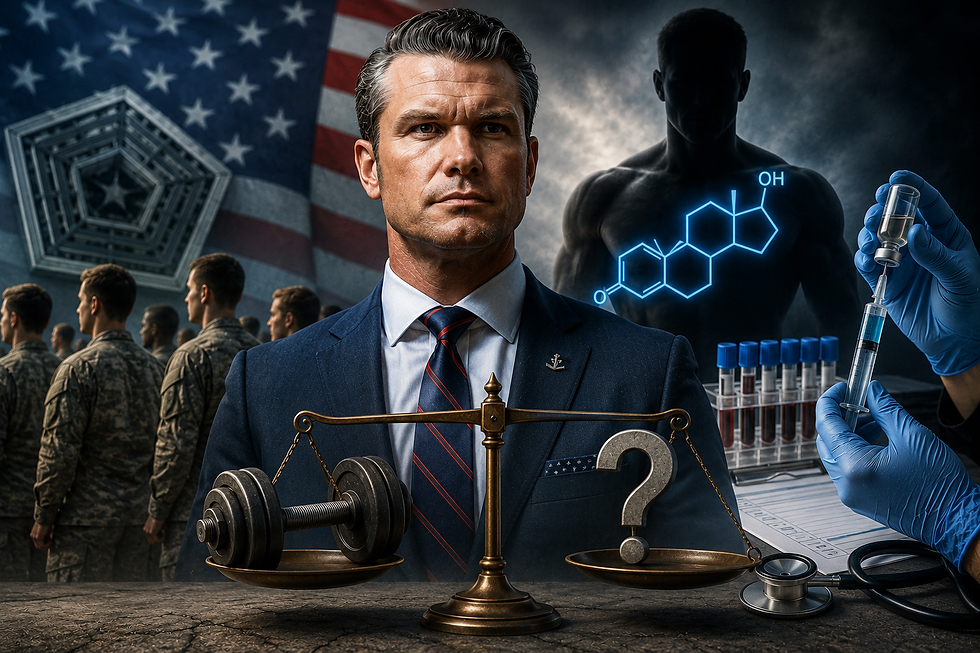
Pete Hegseth wants America's troops hotter and he wants proof and he's ordering it. The defense secretary's memorandum, which went into effect immediately, calls for all active-duty and reserve service members 30 and older to be screened annually for low testosterone as part of their regular health exam. People under 30 years of age are not required to enroll, but may do so willingly. If the numbers are low, the decision to start some form of testosterone replacement therapy, or TRT, is up to the man. In a video on X, Hegseth explained that the exercise is not about his personal well-being but about protecting the "biological foundation needed to sustain the fight," and to "help keep the American warfighter at absolute best.
A muscular pitch, in Hegseth's now-familiar voice of warrior-ethos rhetoric, and it is the latest in a series of instructions designed to alter the physical culture of the military: No beards, No "fat generals" and harsher fitness standards. However, the medical profession is not as sure-footed as the video's presentation of the confident framing might suggest. The statement, issued by the Endocrine Society, the leading professional body for hormone specialists, is a clear-cut rejection of such population screening. That's the message from the American Urological Association, which says that men should not take testosterone out of a box just because they reached a birthday, but only when they're testing positive for deficiency and having symptoms, such as low libido, erectile dysfunction, persistent fatigue, diminished muscle mass, and decreased bone density.
This week, doctors in various forums admitted that there is a gap between anecdote and proof. One urologist has said that those who've been treated for proven low testosterone do experience increased clarity and strength of mind, but that this is only in people who had symptoms of low T, and is not in otherwise healthy men who are routinely getting tested. Doctors specializing in infectious disease and endocrinology push further, stating that a supplementation program can have real side effects on men with normal levels of the hormone such as lower natural production of testosterone and lowered sperm counts, and that making up a diagnosis where there is none is not a minor side effect of an otherwise harmless blood test – it is the biggest risk of screening healthy people who never suffered from anything.
There's also the dollars and cents. Proper diagnosis of low testosterone isn't just a single blood draw, it requires multiple tests conducted over weeks or months, before any treatment be considered, due to how it changes throughout the day, with sleep and stress. One doctor interviewed in the story said the blood draws could cost the military tens of millions of dollars a year, not including the follow-up labs, physician visits or treatment. According to numbers reported, about 5.6 percent of men ages 30 to 79 have clinically low levels of testosterone, making a high cost annual test of all men on the force seem to critics to be a "rounding error" of actual need. That's also in the context of the industry: The global market for testosterone replacement therapy is estimated to be around $2 billion at this point and is projected to rise steadily through the end of this decade, by most researchers' estimates, in part because of direct-to-consumer telehealth platforms. From a commercial point of view a federal requirement for hundreds of thousands of men over 30 would be a boon for that industry, whatever the science reveals.
The term “Operator Syndrome,” which originated in a 2020 study by the Pentagon, which linked chronic low testosterone to the rigors of sleep deprivation, stress and nutrition issues among special ops personnel, also features prominently in Hegseth's memo. It's a stronger and more specific statement than a blanket "mandate" for every service member over 30 it's just an occupational risk to a small, very quick moving population. Critics say the policy is effectively based on the credibility of that limited finding to support a much more expansive program.
The political echo has been equally strong with the medical one. Hegseth has contended that the "highest male standard" should apply to combat units and he has been an outspoken critic of women serving in such roles in his own writing on mothers and combat readiness, which led Senate Democrats to take harsh criticism. Responding to the new policy, one member of the House Armed Services Committee said she hoped the screening would be equally available to servicewomen, a statement which many interpreted as chiding Hegseth for his own lack of such screening. In the meantime, several Democratic lawmakers, who compared the program to hormone treatment for gender-affirming surgery, garnered a lot of backlash on social media, temporarily burying the whole clinical debate under the "press the button" controversy.
Cut through the rhetoric and the culture-war garbage, and you're left with the classic American health policy scenario: a politically popular, politically-prominent intervention doing much more than the evidence would allow. The Pentagon has yet to respond to simple questions regarding cost estimates, how false positives will be dealt with, or if the fitness and combat-ready impact will be the same for both genders. For now, this seems more like a test of a hypothesis than a valid measure of readiness, and it is being tested at public expense on the entire uniformed workforce, while the proof is still outstanding.