

Popular Categories

Politics

Geo Economics

Lifestyle

Analysis

Geopolitics
Civilizational Lens
Defence

The road to war- why India's border builders matter more than its missiles
17 Jul 2026
Created by
The BV Team
It is a strategic infrastructure event that is being held this week in New Delhi's defence establishment that makes a point that flies in the face of popular perceptions of conflict in the modern world. Defence Minister Rajnath Singh during the Border Roads Organisation's conclave held in the capital on July 16 said that the basic fact of military logistics was that soldiers, tanks and supplies had to be driven somewhere, no matter how precise the weaponry was or whether the strike was made from a satellite. His take on the opening front of any War is not the border, but the road that brings a soldier there, became the line that has since been carried by the troops of the defence forces. In the era of hypersonic missiles and algorithmic targeting, it does sound like a simple way of war, but it is a reality that Delhi planners have accepted since the conflict in Ukraine began, and extended to Gaza and the high-stakes stand-off with China: Firepower without movement is a parked army.
These comments were not made “out of the blue.” They came with many, many others who were truly big. According to budget documents accessed by the defence ministry's own analysts, the government has increased the allocation for the BRO by over 200 per cent in the last six years, from approximately Rs 2,104 crore in 2020-21 to Rs 7,394 crore in the current year. When state funding, projects done for other agencies and supplementary grants are added to it, the actual spending has been even higher than the budgeted allocation in recent years with a record Rs 16,690 crore in 2024-25 and an allocation target of Rs 17,900 crore in 2025-26. Since its inception in 1960, it has constructed over 64,100 kilometres of roads, 1,179 bridges, seven tunnels and 22 airfields in India as well as Asia's other important countries: Bhutan, Myanmar, Afghanistan and Tajikistan, thus laying the foundations for a quiet regional power for Delhi that is far less publicised than weapons deals.
The price of such a sum of money is speed, and that's what Singh was driving at. There was an obvious sign of that change: tunnelling technology that has been developed for metro construction in Indian cities is now being reused to bore through rock in the Himalayas, he said. The Atal Tunnel under Rohtang Pass, and the Sela Tunnel in Arunachal Pradesh, built at a cost of about Rs 825 crore, and the high altitude Umling La Pass road are the highlights, but the real reason is economic, not military: all weather connectivity transforms remote, seasonally cut-off districts into working markets, tourist destinations and, obviously, ground that can support year-round troop rotations instead of the frantic summer-only supply runs of a generation past. The Director General of Border Roads, Lieutenant General Harpal Singh, brought a management element to the minister's argument and announced to the same gathering that strategic capability today is more a question of how to plan it intelligently, how quickly it can be executed and how it can be maintained after, a pointed reference to the graft of asset upkeep in terrain where landslides and avalanches destroy progress every winter.
All these are taking place without any separation or isolation from the other side of the Line of Actual Control. American and Indian researchers, who have monitored Beijing's construction of several hundred "Xiaokang" ("well-off") villages along the Tibetan borders over the past several years, now estimate that there are up to 628 such villages, many of which are also capable of hosting People's Liberation Army troops on short notice. In addition to the villages, the Chinese government has built out road and rail infrastructure and opened dozens of airports and heliports in Tibet and Xinjiang, which significantly reduce the PLA's mobilisation time. The response has been two-fold: the Vibrant Villages Programme, which is designed to repopulate and link hundreds of hamlets strung along the border within a few kilometres of the frontier that has seen sustained depopulation, and now the 1,840-kilometre Arunachal Frontier Highway, a roughly Rs 40,000 crore project, which was broken ground by Prime Minister Narendra Modi last September and which will run the entire length of the eastern sector of the disputed frontier. It is the biggest single act of physical occupation that India has ever tried to make along this section of the Himalayas, a highway which was supposed to do the job that diplomatic notes could not, planners say.
There is a wider economic argument in the security argument and that is worth teasing out. Roads which convey troops also convey apples, timber, wool and tourists; a Ladakh or an Arunachal Pradesh which remains connected throughout the winter, is a Ladakh or an Arunachal Pradesh which keeps its population rather than letting it sink to the plains, where the demography has become so thin that it is a security concern. The Rs 975 crore allocated to the BRO for roads and tunnels this year is in addition to the optical fibre network it has earmarked for the defence services and is as much to keep remote posts connected to the national economy and digital services as it is to provide secure military communication. Throw into the mix India's defense capital expenditure, which has increased by almost 22 percent year on year in 2026-27, and in the case of research and development spending, even more so, and a picture emerges of a country that is trying to catch up on an infrastructure deficit that it created over many decades while its opponent was going ahead.
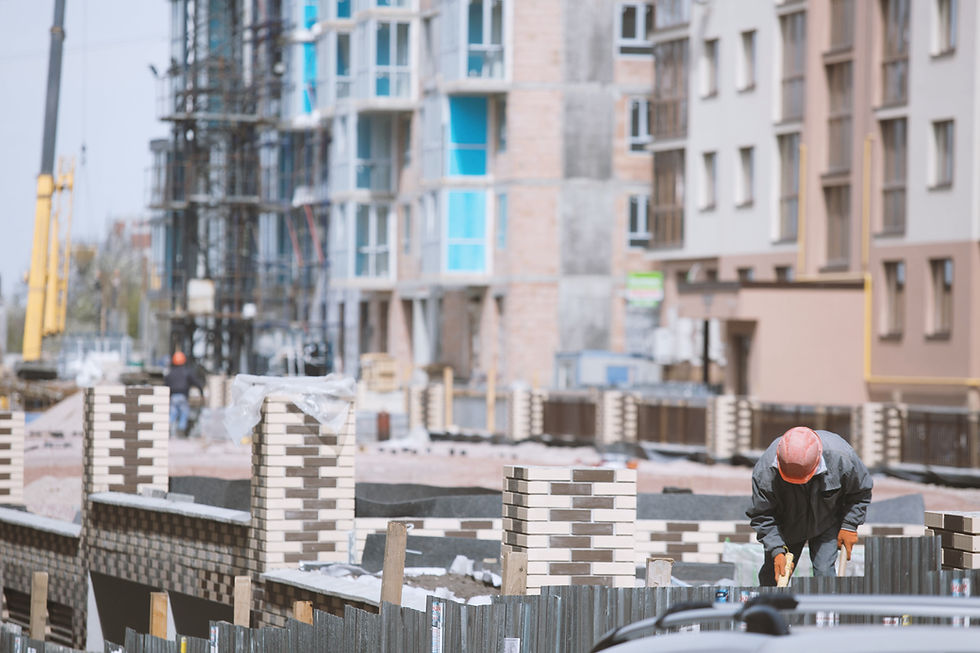
Singh's message, stripped of ceremony, is one that Delhi's officials have been hesitant to make blunt for years: Engineers and contractors will play as big a role as fighter pilots and missile crews in the contest with China along the Himalayas; and a road builder in a hard hat is as deserving of being mentioned as a soldier at the wire.