
Popular Categories

Politics

Geo Economics

Lifestyle

Analysis

Geopolitics

Civilizational Lens

Defence

Deal or Deterrence? Trump’s Iran Warning Signals a Hard Reset in Global Power Play
11 Apr 2026
Created by
The BV Team
A fresh warning from former U.S. President Donald Trump—threatening renewed military action if Iran fails to agree to what he calls a “real agreement”—has once again pushed the Middle East into the center of global strategic calculations. The statement is not just rhetoric; it reflects a deeper shift in how power, diplomacy, and deterrence are being redefined in an increasingly volatile world order.
At its core, this development underscores a growing impatience with prolonged negotiations that yield limited results. The emphasis is now on enforceable outcomes rather than symbolic agreements. This signals a transition from traditional diplomacy to a model where military leverage plays a central role in shaping negotiations.
The phrase “real agreement” is key to understanding the broader intent behind the warning. It implies dissatisfaction with past arrangements that were perceived as temporary fixes rather than lasting solutions. Previous frameworks often focused on limiting certain aspects of Iran’s capabilities while leaving room for strategic ambiguity.
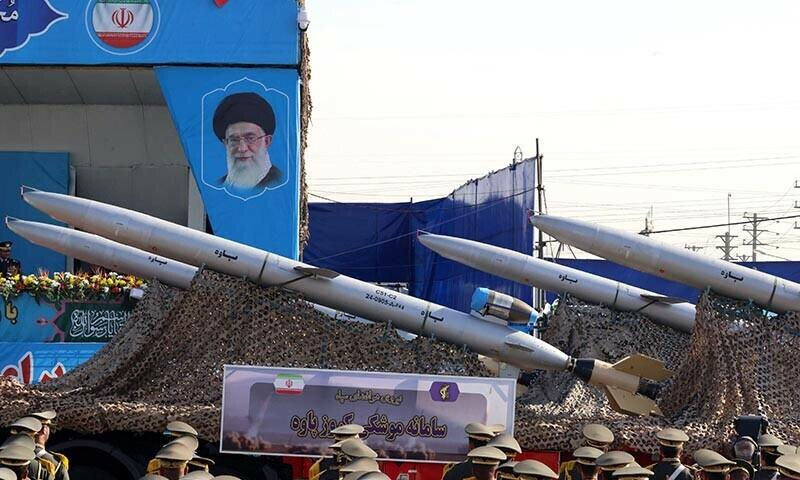
This time, the demand appears to be for a more comprehensive and verifiable framework—one that addresses not just nuclear concerns but also regional influence, missile capabilities, and proxy networks. Such a shift reflects a belief that partial agreements merely delay conflict rather than prevent it.
From a strategic standpoint, the message is clear: negotiations without enforceability are no longer acceptable. The emphasis is on outcomes that fundamentally alter the balance of power rather than maintain a fragile status quo.
Trump’s warning highlights a broader trend where deterrence is increasingly being used as a tool of diplomacy. The implicit message is that credible military options remain on the table, and that failure to comply could trigger direct consequences.
This approach aligns with a school of thought that views strength as the foundation of negotiation. In this framework, dialogue is not abandoned but is conducted under the shadow of potential escalation. The objective is to compel compliance rather than seek consensus.
Such a strategy carries both advantages and risks. On one hand, it can accelerate decision-making and force clarity in negotiations. On the other, it raises the probability of miscalculation, especially in a region already marked by complex alliances and rivalries.
For Iran, the situation presents a difficult balancing act. On one side, it must project resilience and avoid appearing vulnerable to external pressure. On the other, it faces economic constraints and internal pressures that make prolonged confrontation costly.
Iran’s likely response will involve a mix of strategic patience and calibrated signaling—maintaining its posture while leaving room for negotiation. However, the increased emphasis on enforcement could limit its ability to rely on delay tactics that have historically been part of its negotiation strategy.
This creates a scenario where both sides are operating under heightened pressure, reducing the margin for error.
The implications of this standoff extend far beyond the Middle East. The region remains central to global energy supply, and any escalation could disrupt critical routes such as the Strait of Hormuz, through which a significant portion of the world’s oil passes.
Markets are already sensitive to such developments, with even the perception of instability capable of driving price volatility. Beyond energy, the situation also affects global alliances. Countries are being forced to reassess their positions, balancing strategic partnerships with economic interests.
For emerging powers like India, this environment demands careful navigation. Energy security, diaspora safety, and trade routes all come into play. The key lesson is the importance of strategic autonomy—engaging with multiple stakeholders while safeguarding national interests.
What this episode ultimately reveals is a broader transformation in global diplomacy. The emphasis is shifting from process-driven negotiations to outcome-driven strategies. Talks are no longer seen as ends in themselves but as instruments to secure tangible gains.
This reflects a more hard-edged worldview where power dynamics take precedence over procedural norms. Agreements are expected to deliver concrete results, and failure to do so invites escalation.
Trump’s warning to Iran is not an isolated statement; it is part of a larger narrative redefining how global conflicts are approached. It underscores a belief that strength and clarity are essential for meaningful negotiations.
As the situation evolves, the world faces a critical question: will this strategy lead to a more stable order through decisive outcomes, or will it increase the risk of confrontation? The answer will shape not just the future of U.S.-Iran relations, but the broader architecture of global power in the years to come.