
Popular Categories

Politics

Geo Economics

Lifestyle

Analysis

Geopolitics

Civilizational Lens

Defence

Tehran Holds the Final Word on a Hormuz Deal Washington Has Promised for a Week
8 Aug 2026
Created by
The BV Team
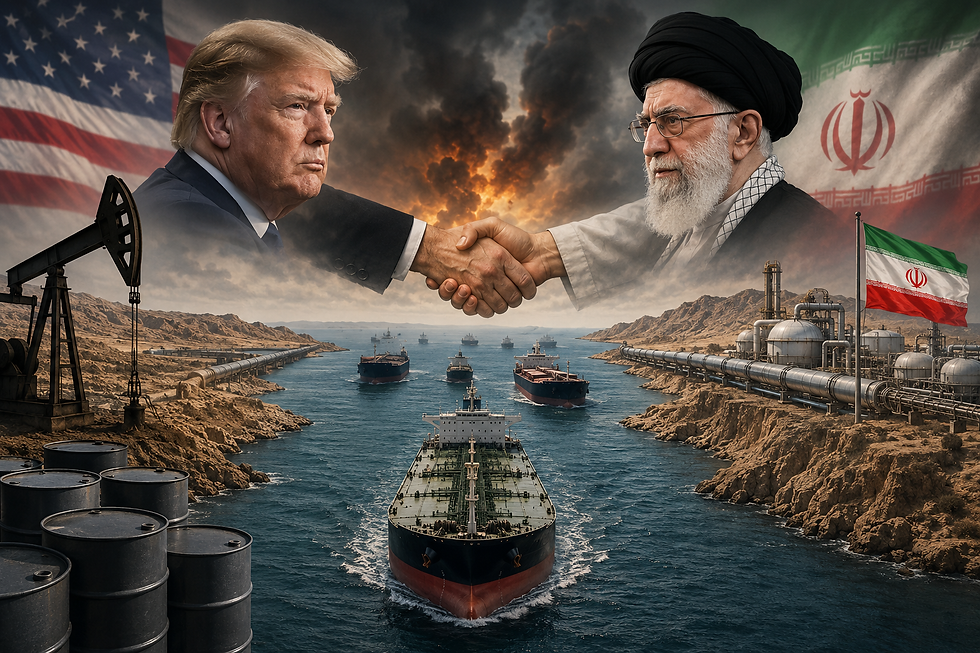
Five months into a conflict that has turned the world's busiest oil pathway into a war zone, the Supreme National Security Council of Iran is the body most of the world has heard little from, and is likely to hear very little from, in the future regarding the fate of the Strait of Hormuz. A diplomat briefed on the mediation told Axios on Friday that Tehran is merely holding out for the green light from that council to an interim deal with Oman and the United States, and should get it soon. Another U.S. official, speaking on the condition of anonymity, said the same day that "we expect a deal soon.
That is the sentiment expressed in one form or another, almost every day since President Donald Trump aborted a planned attack on Iranian energy infrastructure last Saturday after reports that a deal was imminent, based on assurances from regional diplomats. A signing might take place Tuesday, he said. Then Wednesday or Thursday. By Thursday, in the Oval Office, he was more at ease with patience: "We're doing very well. I'm in the negotiating. I think we're doing fine. It could be soon. Mohammed Bagher Ghalibaf, Iran's top negotiator, used his personal social media account to ridicule the trend, writing, “massive attack coming wait, never mind, they want to negotiate” and that Washington is “bullying and broken promises.”
If it's any more clear, it's the substance of what is being negotiated, rather than the timeline. In the first report, MS Now, Iran would run an inbound shipping lane, and Oman an outbound lane, while both countries would supervise traffic through the 33km-wide shipping lane. The outline has been reportedly endorsed by the Gulf Cooperation Council. Washington's terms for its support are very limited but also very strong: no tolls and no Iranian clearance requirement. It's that one demand that's keeping the deal from closing. Iran has offered a transport charge of 5-7 per cent of the value of a cargo and Oman is in talks for one a bit lower, at 3 per cent. Even if the fee is relatively small, and there are limits to which it can be raised, a modest fee is near impractical to implement in practice, four people directing Reuters to the shipping industry said this week, noting that US sanctions and insurance provisions that cover voyages of tankers are not designed to allow payments to a sanctioned Iranian firm. What is written is not what is sailing.
That uncertainty has been there in real time in the markets. Brent crude rose to about $79.40 a barrel by midweek after the agreement appeared to be nearing finalization, but rallied back to above $82 on Thursday following reports in Iranian state media that a bill was coming faring below the framework being negotiated with Oman. Still being studied by a parliamentary committee, that bill would prohibit all American and Israeli ships, as well as vessels from any nation that is accused of harming Iran's regional allies such as Hezbollah, and impose fines of up to 20 percent of the value of a ship's cargo. By Friday afternoon Brent had risen back to about $83.40, signalling both had been up about 9 to 10 percent over the course of the week which is highly unusual even by the standards of this war and an indicator of how fragile the market's confidence is.
The economic downside is why there is such a whiplash. Prior to the war on February 28, roughly 20 million barrels of traded oil and 20 million cubic feet of traded LNG passed through the Hormuz, near the mouth of the Gulf of Oman. The traffic has since dwindled to a trickle, with as few vessels as eight now coming and going each day, compared with about 130 pre-fighting, according to shipping trackers cited by Al Jazeera. Asia's import demand dominated by China and India with nearly 44 per cent of that pre-war flow, and most of the rest coming from Japan and South Korea is the first to be hardest hit by any extended closure, and it's the first to feel the impact on fuel prices from Mumbai to Tokyo.
That is the reason why Gulf producers have abandoned diplomacy as a means to solve the issue. Saudi Arabia is operating its 7-million-barrel-a-day East-West pipeline, which stretches across the peninsula to the Red Sea, at its full capacity, while the UAE is trying to nearly double its 3.6-million-barrel-a-day Fujairah-bound Abu Dhabi Crude Oil Pipeline to 6.3 million by 2027. Goldman Sachs analysts estimate that seven of the bypasses in the region could together be capable of pumping more than 14 million barrels a day by the end of 2028, more than 60 percent of the Gulf states' pre-war export capacity None of it will take the place of Hormuz entirely, and it is not as if this has not happened to the pipelines this year either thanks to Iranian drones and missiles. But the investment signals something the negotiating table cannot: Gulf capitals are betting on a waterway they no longer have full faith in whether or not there's a deal.
The fee battle is actually a bigger and messier one. Even if a signed interim accord were reached, it would only gain them 60 days, as Washington and Tehran did in June before it fell apart again in a matter of weeks in the face of renewed attacks. It would not affect Iran's nuclear file, which has been put on the back burner for a second round of talks that may never come if this one continues to falter. No cabinet minister has been able to meet him since the Feb. 28 attacks that killed his father, the opposition-aligned outlet IranWire reported Friday citing two unnamed sources close to President Masoud Pezeshkian's office, and speculation on his health is spreading "at the highest levels of the regime. However, state television quoted Pezeshkian this week as saying reaching Khamenei is "very difficult" right now. None of this has been substantiated independently and Khamenei has not come out in public or been heard in an unedited recording since he assumed the position.