
Popular Categories

Politics

Geo Economics

Lifestyle

Analysis

Geopolitics

Civilizational Lens

Defence

Why Late September Is Actually Prime Planting Season, Not the Off-Season
17 Sept 2026
Created by
The BV Team
Most people treat gardening the way they treat gym memberships something to think about once the weather turns and the mood strikes, usually deep into winter when it's already too late for half of what they want to grow. That instinct is backwards, and nurseries across India and much of the northern hemisphere are seeing it play out in real time. The window between mid-September and mid-October is when cool-season plants actually establish themselves, root systems settle in before the first real cold snap, and gardeners who wait until December end up with leggy, underdeveloped plants that never quite catch up. Horticulturists have been saying this for years, but the message is finally landing with a wider audience, partly because home gardening has stopped being a retiree's hobby and turned into a genuine consumer category with real money behind it.
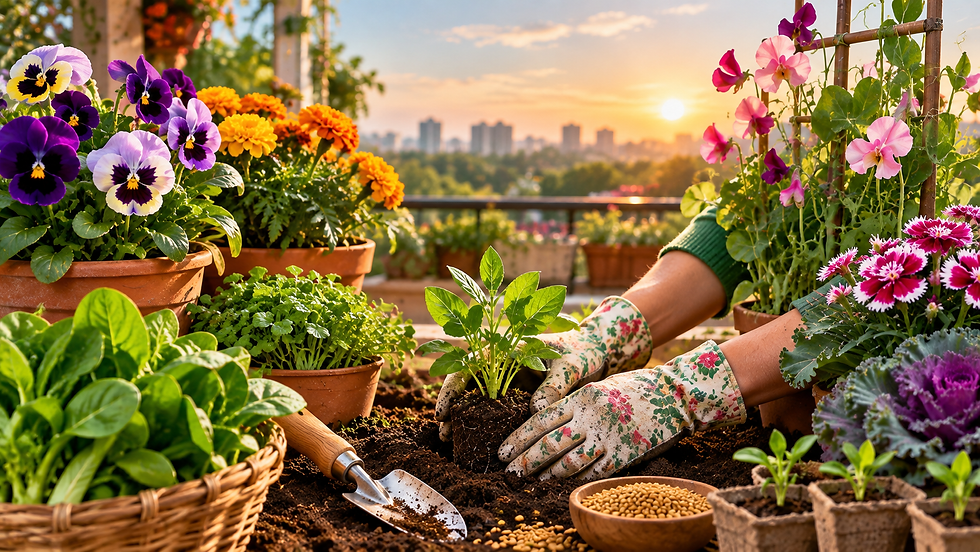
Start with pansies, because they're the plant everyone gets wrong. Viola x wittrockiana, to use its formal name, is bred specifically to thrive in cold rather than merely survive it plants have been documented tolerating temperatures as low as minus 6 degrees Celsius, freezing solid overnight and bouncing back with color by afternoon. But plant them in November after the first frost has already hardened the soil, and you lose the fall bloom entirely, sometimes the spring one too. The ideal window is roughly four to six weeks before the first hard freeze, which for most of north India and similar climates means right now, not after Diwali.
Fenugreek, or methi, tells a different but related story, and it's one with actual economic weight behind it. India remains the world's largest producer and consumer of fenugreek, grown commercially across Rajasthan, Gujarat and Madhya Pradesh, but it's also become one of the most forgiving crops for balcony and terrace growers because it germinates in three to five days and can be harvested as a cut-and-come-again green within three weeks of sowing. That speed matters more than it sounds. Urban households short on time and space have gravitated toward fast-turnaround crops precisely because they deliver a visible, edible result before enthusiasm fades which is the single biggest reason most first-time kitchen gardens fail within a season.
Marigold, sweet peas, dianthus, ornamental kale and spinach round out the list of plants that reward September planting, each for slightly different reasons cold tolerance, quick germination, or simply that they look better established before winter light gets thin. Sweet peas in particular need the extra weeks: sown too late, the vines put out weak growth and skip flowering almost entirely, a mistake nurseries in the Delhi-NCR belt say they see repeated every single year.
What's changed is the scale of the audience making these mistakes, and that's where the numbers get interesting. The global gardening market was valued at roughly 120 billion dollars in 2024 and is projected to climb toward 150 billion dollars by 2030, growing at around 5 percent annually driven not by professional landscaping but by ordinary households deciding a balcony or a rooftop is worth investing in. In the United States alone, more than 185 million people gardened in some form in 2023, and roughly a third of American households were growing their own vegetables and fruit.
India's own numbers track a similar curve from a smaller base: the domestic gardening tools segment was valued near 4.6 billion dollars in 2025 and is forecast to nearly double by 2034, while the indoor and home-décor plants category, valued around 250 million dollars in 2024, is expected to grow at close to 9 percent a year through the end of the decade. None of this is happening because people suddenly discovered a love of soil. It's rising disposable income, denser cities producing a hunger for green space that isn't there, and a DIY culture that millennials and Gen Z have imported from wellness and home-décor trends into something more literal.
There's a policy layer underneath this too, easy to miss but worth noting. India's restrictions on single-use plastics pushed a segment of urban gardeners toward composting and rainwater harvesting almost by accident, turning a regulatory inconvenience into a genuine behavioral shift. Government-backed urban greening pushes have nudged the same direction from the top down. The result is a gardening culture that looks less like a hobby and more like a small, distributed industry nurseries, seed suppliers, smart irrigation startups and balcony-design consultants all feeding off the same swelling base of first-time growers.
None of which changes the basic, unglamorous truth sitting underneath all of it: none of these plants care about market projections or urban trend pieces. They care about soil temperature and daylight hours, and both are already moving in the direction that makes this the actual planting window, not a preview of one.