
AI’s Inflection Point: Why the Next Leap Could Redefine Power, Productivity, and Global Competition
Artificial Intelligence is entering a phase that many industry leaders now describe not as incremental progress, but as a structural leap—one that could fundamentally reshape economies, corporate strategy, and global power equations. What is unfolding is not just a technology upgrade; it is a redefinition of how value is created, scaled, and controlled.

6 April 2026
The BV Team
Artificial Intelligence is entering a phase that many industry leaders now describe not as incremental progress, but as a structural leap—one that could fundamentally reshape economies, corporate strategy, and global power equations. What is unfolding is not just a technology upgrade; it is a redefinition of how value is created, scaled, and controlled.
Recent signals from top financial and technology circles suggest that AI is moving beyond experimentation into deep integration. Enterprises are no longer treating AI as a side tool for efficiency gains; it is becoming central to decision-making, operations, and even product creation. This shift marks the transition from “AI as support” to “AI as core infrastructure.”
At the heart of this transformation lies a dramatic increase in capability. Advances in models, computing power, and data processing are enabling systems to perform complex tasks with higher accuracy and speed than ever before. From automating high-skill cognitive work to optimizing large-scale operations, AI is now capable of delivering measurable economic outcomes rather than just theoretical potential.
This evolution is expected to unlock significant productivity gains across industries. Sectors such as finance, healthcare, logistics, and manufacturing are already witnessing early benefits. Tasks that once required large teams and extended timelines are now being compressed into shorter cycles with fewer resources. For businesses, this translates into cost efficiency, faster execution, and improved scalability.
However, the implications go far beyond corporate performance. The AI leap is also redefining competitive dynamics at a global level. Countries and companies that lead in AI development and deployment will gain disproportionate advantages—economic, technological, and even geopolitical. Control over advanced AI capabilities is quickly becoming a strategic asset, similar to control over energy resources or critical infrastructure in earlier eras.
This creates a new form of competition—one that is less visible but potentially more consequential. Instead of traditional battles over territory or trade, the focus shifts to data, algorithms, and computational dominance. The question is no longer just who produces more, but who computes better, faster, and smarter.
At the same time, this rapid acceleration introduces new challenges. One of the most immediate concerns is workforce disruption. As AI systems take over tasks across skill levels, the nature of employment is set to change. While new roles will emerge, the transition may not be smooth, especially for sectors heavily reliant on routine or semi-skilled work.
Another critical issue is concentration of power. The development of advanced AI requires massive investment in infrastructure, data, and talent. This naturally favors a small group of large corporations and well-resourced nations. If left unchecked, this concentration could widen economic inequalities and create new forms of dependency.
From a strategic lens, the current moment demands clarity of approach. Simply adopting AI tools is not enough; the real advantage lies in integrating them into a broader vision. Organizations and nations that treat AI as a long-term strategic pillar—rather than a short-term trend—are more likely to lead in the coming decade.
For India, this presents both an opportunity and a challenge. With a strong base in technology talent and a rapidly digitizing economy, the country is well-positioned to participate in the AI revolution. However, capturing this opportunity requires decisive action—investment in infrastructure, focus on innovation, and a clear policy framework that balances growth with safeguards.
Equally important is the mindset shift. The AI wave is not about passive adoption; it is about proactive shaping. Waiting to see how global leaders move could result in missed opportunities. Instead, there is a need for assertive positioning—building capabilities, creating ecosystems, and ensuring that India is not just a user of AI but a contributor to its evolution.
Globally, the narrative around AI is often framed in terms of risk versus reward. While concerns around ethics, regulation, and misuse are valid, an overly cautious approach could slow down progress and cede advantage to more aggressive players. The real challenge lies in finding the balance—leveraging AI’s potential while managing its risks.
What is clear is that the current phase is a turning point. The next few years will determine not just how AI evolves, but who benefits from it. This is not a distant future scenario—it is a present reality unfolding at speed.
The emerging AI landscape is less about technology alone and more about strategic intent. Those who recognize this shift early and act decisively will shape the next era of global competition. Those who hesitate risk becoming dependent on systems and frameworks defined by others.
In that sense, AI is no longer just an innovation story—it is a power story. And the race has already begun.
11 April 2026
Beyond Oil: How the Middle East Conflict Is Rewiring Global Supply Chains, Food Security, and Technology Flows
The BV Team
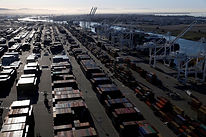
The ongoing tensions in the Middle East are no longer confined to the familiar narrative of oil shocks. While energy markets remain highly sensitive, the deeper and more consequential impact is unfolding across global supply chains, food systems, and technology flows.
6 April 2026
Gulf Markets in Wait Mode: Oil, Diplomacy, and the Strategic Pause Before the Next Move
The BV Team
Financial markets across the Gulf region are currently reflecting a state of calculated hesitation. Rather than reacting with sharp directional moves, investors appear to be pausing—waiting for clarity on one of the most critical variables shaping the region today: the evolving dynamics between the United States and Iran.

6 April 2026
Global Markets on Edge: Growth Signals Clash with Geopolitical and Economic Uncertainty
The BV Team
Global financial markets are currently navigating a complex and fragile phase, where optimism around growth is increasingly being offset by geopolitical tensions, policy uncertainty, and structural economic shifts. What appears on the surface as routine market movement is, in reality, a deeper struggle between competing forces shaping the global economic order.

6 April 2026
AI’s Inflection Point: Why the Next Leap Could Redefine Power, Productivity, and Global Competition
The BV Team
Artificial Intelligence is entering a phase that many industry leaders now describe not as incremental progress, but as a structural leap—one that could fundamentally reshape economies, corporate strategy, and global power equations. What is unfolding is not just a technology upgrade; it is a redefinition of how value is created, scaled, and controlled.

5 April 2026
OPEC+ Output Debate: Market Stability Move or Strategic Power Play?
The BV Team
As OPEC+ considers another potential increase in oil production, the global energy market finds itself at a critical crossroads. While the move is being positioned as a response to stabilize prices and ensure adequate supply, a deeper analysis suggests that this decision is layered with strategic intent, geopolitical signaling, and long-term market positioning.

31 March 2026
Middle East Conflict: A Shockwave Through Global Growth and Prices
The BV Team
The intensifying conflict in the Middle East is no longer a regional issue—it is rapidly evolving into a global economic disruptor. As tensions rise across critical energy corridors and strategic maritime routes, the ripple effects are being felt far beyond the immediate zone of conflict. From fuel prices to food supply chains, the world is entering a phase of heightened uncertainty, where geopolitics and economics are deeply intertwined.

31 March 2026
From Missiles to Markets: The Shift Toward Economic Warfare in the Iran Conflict
The BV Team
As the Iran conflict evolves, a noticeable shift is taking place—one that moves beyond conventional military engagement into a more complex and far-reaching domain: economic warfare. This transition marks a critical phase where the objective is no longer just territorial or tactical dominance, but systemic pressure on the opponent’s ability to sustain itself.

28 March 2026
India’s Strategic Energy Pivot: Navigating Crisis, Autonomy, and Opportunity
The BV Team
As tensions between the United States and Iran intensify, the ripple effects are being felt far beyond the immediate conflict zone. One of the most significant responses is emerging from India, where strategic planners are actively recalibrating energy sourcing—reportedly exploring a renewed push toward liquefied natural gas (LNG) imports from Russia while simultaneously engaging Washington for necessary waivers.

26 March 2026
U.S.–Iran Tensions: Strategic Signaling or the Start of a Larger Global Reset?
The BV Team
The evolving posture of the United States toward Iran is once again drawing global attention, raising questions about whether the world is witnessing a limited strategic maneuver or the early stages of a broader geopolitical reset. Signals attributed to Donald Trump and sections of the U.S. strategic establishment suggest a shift that goes beyond routine pressure tactics, hinting at a recalibration of power equations across the Middle East.


19 March 2026
How The Hormuz Crisis Is Quietly Rewiring Global Food Security
The BV Team
At first, the ongoing tensions around the Strait of Hormuz appear to be about oil, naval movement, and regional conflict. But beneath lies a far more consequential chain reaction—one that connects energy flows to fertilisers, and global food security.
