
OPEC+ Output Debate: Market Stability Move or Strategic Power Play?
As OPEC+ considers another potential increase in oil production, the global energy market finds itself at a critical crossroads. While the move is being positioned as a response to stabilize prices and ensure adequate supply, a deeper analysis suggests that this decision is layered with strategic intent, geopolitical signaling, and long-term market positioning.

5 April 2026
The BV Team
As OPEC+ considers another potential increase in oil production, the global energy market finds itself at a critical crossroads. While the move is being positioned as a response to stabilize prices and ensure adequate supply, a deeper analysis suggests that this decision is layered with strategic intent, geopolitical signaling, and long-term market positioning.
At a surface level, increasing output appears logical. Oil prices have remained volatile amid geopolitical tensions, supply chain disruptions, and fluctuating demand patterns. By releasing more barrels into the market, OPEC+ aims to prevent sharp price spikes that could destabilize global economies already dealing with inflationary pressures. For major consuming nations, particularly in Asia and Europe, such a move could offer temporary relief.
However, the underlying dynamics are far more complex. OPEC+ is not merely an economic alliance—it is a geopolitical instrument. Decisions on output are rarely just about balancing supply and demand; they are also about asserting influence, managing alliances, and shaping global economic narratives. Increasing production at this juncture could be interpreted as a calculated step to maintain control over pricing power while preempting external pressures from major economies seeking lower energy costs.
There is also a strategic timing element. With global growth showing signs of uneven recovery, energy demand projections remain uncertain. By adjusting supply proactively, OPEC+ can position itself as a stabilizing force while simultaneously protecting its market share against emerging competitors, including non-OPEC producers and alternative energy sources. This balancing act between cooperation and competition defines much of the group’s decision-making process.
From a geo-economic perspective, oil remains one of the most powerful levers of influence. Countries that control energy supply chains hold significant sway over global trade flows, currency stability, and even political alignments. Any adjustment in output levels therefore has ripple effects far beyond the energy sector. It impacts shipping costs, industrial production, inflation rates, and ultimately the economic health of nations.
Another dimension to consider is the relationship between OPEC+ and major global powers. In recent years, there has been increasing pressure from Western economies to moderate oil prices, particularly during periods of high inflation. At the same time, key OPEC+ members maintain strategic ties with both Western and Eastern blocs, navigating a delicate balance of interests. Decisions on output often reflect this complex web of relationships rather than purely market-driven logic.
Moreover, the potential increase in production highlights the ongoing transition in global energy markets. While renewable energy continues to gain traction, oil remains indispensable in the short to medium term. This creates a unique window where traditional energy producers still wield considerable power, even as the world gradually shifts toward alternative sources. OPEC+ is acutely aware of this transition and appears to be maximizing its influence while the window remains open.
For emerging economies, the implications are particularly significant. Lower oil prices can ease import bills and support growth, but they can also signal broader economic slowdowns if driven by weak demand. Conversely, higher prices can strain fiscal balances and widen trade deficits. This duality makes OPEC+ decisions a critical variable in economic planning for countries across Asia, Africa, and Latin America.
From a strategic standpoint aligned with a strong national outlook, the key takeaway is the importance of energy independence and diversified supply chains. Nations that rely heavily on imported energy remain vulnerable to external decisions beyond their control. Building domestic capacity, investing in alternative energy, and securing diversified import sources are essential to reducing this vulnerability.
There is also a broader lesson in how global power is exercised. Control over critical resources—whether energy, technology, or trade routes—translates into influence that extends beyond immediate economic gains. OPEC+ exemplifies this principle, demonstrating how coordinated action among resource-rich nations can shape global outcomes.
In conclusion, the potential OPEC+ output increase is not just a technical adjustment to market conditions—it is a strategic move with far-reaching implications. It reflects the interplay of economics, geopolitics, and long-term positioning in a rapidly evolving global landscape. As the world watches closely, the decision will not only influence oil prices but also offer insights into the shifting balance of power in the international system.
11 April 2026
Beyond Oil: How the Middle East Conflict Is Rewiring Global Supply Chains, Food Security, and Technology Flows
The BV Team
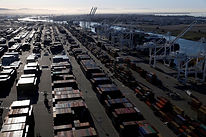
The ongoing tensions in the Middle East are no longer confined to the familiar narrative of oil shocks. While energy markets remain highly sensitive, the deeper and more consequential impact is unfolding across global supply chains, food systems, and technology flows.
6 April 2026
Gulf Markets in Wait Mode: Oil, Diplomacy, and the Strategic Pause Before the Next Move
The BV Team
Financial markets across the Gulf region are currently reflecting a state of calculated hesitation. Rather than reacting with sharp directional moves, investors appear to be pausing—waiting for clarity on one of the most critical variables shaping the region today: the evolving dynamics between the United States and Iran.

6 April 2026
Global Markets on Edge: Growth Signals Clash with Geopolitical and Economic Uncertainty
The BV Team
Global financial markets are currently navigating a complex and fragile phase, where optimism around growth is increasingly being offset by geopolitical tensions, policy uncertainty, and structural economic shifts. What appears on the surface as routine market movement is, in reality, a deeper struggle between competing forces shaping the global economic order.

6 April 2026
AI’s Inflection Point: Why the Next Leap Could Redefine Power, Productivity, and Global Competition
The BV Team
Artificial Intelligence is entering a phase that many industry leaders now describe not as incremental progress, but as a structural leap—one that could fundamentally reshape economies, corporate strategy, and global power equations. What is unfolding is not just a technology upgrade; it is a redefinition of how value is created, scaled, and controlled.

5 April 2026
OPEC+ Output Debate: Market Stability Move or Strategic Power Play?
The BV Team
As OPEC+ considers another potential increase in oil production, the global energy market finds itself at a critical crossroads. While the move is being positioned as a response to stabilize prices and ensure adequate supply, a deeper analysis suggests that this decision is layered with strategic intent, geopolitical signaling, and long-term market positioning.

31 March 2026
Middle East Conflict: A Shockwave Through Global Growth and Prices
The BV Team
The intensifying conflict in the Middle East is no longer a regional issue—it is rapidly evolving into a global economic disruptor. As tensions rise across critical energy corridors and strategic maritime routes, the ripple effects are being felt far beyond the immediate zone of conflict. From fuel prices to food supply chains, the world is entering a phase of heightened uncertainty, where geopolitics and economics are deeply intertwined.

31 March 2026
From Missiles to Markets: The Shift Toward Economic Warfare in the Iran Conflict
The BV Team
As the Iran conflict evolves, a noticeable shift is taking place—one that moves beyond conventional military engagement into a more complex and far-reaching domain: economic warfare. This transition marks a critical phase where the objective is no longer just territorial or tactical dominance, but systemic pressure on the opponent’s ability to sustain itself.

28 March 2026
India’s Strategic Energy Pivot: Navigating Crisis, Autonomy, and Opportunity
The BV Team
As tensions between the United States and Iran intensify, the ripple effects are being felt far beyond the immediate conflict zone. One of the most significant responses is emerging from India, where strategic planners are actively recalibrating energy sourcing—reportedly exploring a renewed push toward liquefied natural gas (LNG) imports from Russia while simultaneously engaging Washington for necessary waivers.

26 March 2026
U.S.–Iran Tensions: Strategic Signaling or the Start of a Larger Global Reset?
The BV Team
The evolving posture of the United States toward Iran is once again drawing global attention, raising questions about whether the world is witnessing a limited strategic maneuver or the early stages of a broader geopolitical reset. Signals attributed to Donald Trump and sections of the U.S. strategic establishment suggest a shift that goes beyond routine pressure tactics, hinting at a recalibration of power equations across the Middle East.


19 March 2026
How The Hormuz Crisis Is Quietly Rewiring Global Food Security
The BV Team
At first, the ongoing tensions around the Strait of Hormuz appear to be about oil, naval movement, and regional conflict. But beneath lies a far more consequential chain reaction—one that connects energy flows to fertilisers, and global food security.
