
How The Hormuz Crisis Is Quietly Rewiring Global Food Security
At first, the ongoing tensions around the Strait of Hormuz appear to be about oil, naval movement, and regional conflict. But beneath lies a far more consequential chain reaction—one that connects energy flows to fertilisers, and global food security.

19 March 2026
The BV Team
At first glance, the ongoing tensions around the Strait of Hormuz appear to be about oil, naval movement, and regional conflict. But beneath this visible layer lies a far more consequential chain reaction—one that connects energy flows to fertilisers, and fertilisers to global food security.
This is where the real story begins.
The Strait of Hormuz is not just a route for crude oil. It is a critical artery for a wide range of commodities, including natural gas—particularly LNG—which forms a key input in fertiliser production. Any disruption here does not remain confined to energy markets; it cascades into agriculture, food prices, and ultimately, global stability.
To understand this, one must look at the structure of modern agriculture.
Fertilisers such as urea and ammonia are heavily dependent on natural gas. Gas is not just an energy source—it is a feedstock. When gas prices rise or supply becomes uncertain, fertiliser production costs increase. This leads to reduced output, higher prices, or both.
Now connect this to Hormuz.
A significant portion of global LNG shipments passes through this chokepoint. If tensions escalate, even the perception of disruption can push up gas prices. This, in turn, affects fertiliser availability and pricing across the world.
The result is a delayed but powerful impact on food systems.
Farmers face higher input costs. Crop yields may decline due to reduced fertiliser use. Food prices rise, particularly in import-dependent regions. And what begins as a geopolitical flashpoint transforms into an economic and humanitarian issue.
This chain reaction is often underestimated.
Because the link between oil tankers in Hormuz and food prices in distant markets is not immediately visible. But in a globalized system, these connections are tightly woven.
The current phase of conflict has amplified this risk.
Even without a full blockade, increased military activity, higher insurance premiums, and cautious shipping behavior are enough to disrupt normal flows. Markets respond quickly to such signals, often pricing in risk before actual disruption occurs.
This is where geopolitics merges with geo-economics.
Control over chokepoints like Hormuz is not just about regional dominance—it is about influencing global systems. Energy, food, and trade are interconnected. Disrupt one, and the others follow.
For countries like India, this has direct implications.
India is both a major importer of energy and a significant consumer of fertilisers. Any sustained increase in input costs affects agriculture, food prices, and inflation. Given the scale of India’s population, even small disruptions can have amplified effects.
However, India also has certain buffers.
Strategic reserves, diversified sourcing, and government support mechanisms in the fertiliser sector provide some insulation. But these are not absolute protections. Prolonged disruption in global supply chains can still exert pressure.
This is why developments in Hormuz must be tracked not just as a geopolitical event, but as a systemic risk factor.
There is also a broader global dimension.
Many developing countries are far more vulnerable than India. They rely heavily on imported fertilisers and have limited fiscal capacity to absorb price shocks. For them, rising fertiliser costs can translate directly into food shortages and social instability.
This creates a second-order geopolitical effect.
Food insecurity often leads to political unrest, migration pressures, and regional instability. In this sense, the Hormuz crisis has the potential to trigger consequences far beyond its immediate geography.
Another important aspect is timing.
Agricultural cycles are sensitive to input availability. Disruptions at critical stages—planting or fertilisation periods—can have long-lasting effects on output. Unlike energy markets, where adjustments can be relatively quick, agriculture operates on longer timelines.
This means that even short-term disruptions can have extended consequences.
From a strategic perspective, what we are witnessing is a shift in how power is exercised.
Earlier, control over territory defined influence. Today, control over systems—energy routes, supply chains, and critical inputs—defines it.
Hormuz is a perfect example of this.
It is not just a narrow waterway; it is a lever.
A lever that can influence oil prices, fertiliser availability, and food security across continents.
Coming back to the central question—what does this crisis really signify?
It signifies that global risks are becoming more interconnected.
Energy is no longer just about fuel.Fertilisers are no longer just about agriculture.Food is no
longer just about consumption.
They are all part of a larger system where disruption in one node affects the entire network.
For policymakers, this demands a more integrated approach.
Energy policy cannot be separated from agricultural policy. Trade strategy cannot ignore supply chain vulnerabilities. And geopolitical analysis must extend beyond immediate conflict zones to include downstream impacts.
The Hormuz situation is therefore not just a regional issue—it is a global stress test.
A test of how resilient interconnected systems really are.
And as the world navigates this phase, one thing becomes increasingly clear:
The future of geopolitics will not be decided only by wars—but by how well nations manage the
invisible links between energy, food, and survival.
11 April 2026
Beyond Oil: How the Middle East Conflict Is Rewiring Global Supply Chains, Food Security, and Technology Flows
The BV Team
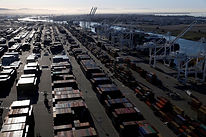
The ongoing tensions in the Middle East are no longer confined to the familiar narrative of oil shocks. While energy markets remain highly sensitive, the deeper and more consequential impact is unfolding across global supply chains, food systems, and technology flows.
6 April 2026
Gulf Markets in Wait Mode: Oil, Diplomacy, and the Strategic Pause Before the Next Move
The BV Team
Financial markets across the Gulf region are currently reflecting a state of calculated hesitation. Rather than reacting with sharp directional moves, investors appear to be pausing—waiting for clarity on one of the most critical variables shaping the region today: the evolving dynamics between the United States and Iran.

6 April 2026
Global Markets on Edge: Growth Signals Clash with Geopolitical and Economic Uncertainty
The BV Team
Global financial markets are currently navigating a complex and fragile phase, where optimism around growth is increasingly being offset by geopolitical tensions, policy uncertainty, and structural economic shifts. What appears on the surface as routine market movement is, in reality, a deeper struggle between competing forces shaping the global economic order.

6 April 2026
AI’s Inflection Point: Why the Next Leap Could Redefine Power, Productivity, and Global Competition
The BV Team
Artificial Intelligence is entering a phase that many industry leaders now describe not as incremental progress, but as a structural leap—one that could fundamentally reshape economies, corporate strategy, and global power equations. What is unfolding is not just a technology upgrade; it is a redefinition of how value is created, scaled, and controlled.

5 April 2026
OPEC+ Output Debate: Market Stability Move or Strategic Power Play?
The BV Team
As OPEC+ considers another potential increase in oil production, the global energy market finds itself at a critical crossroads. While the move is being positioned as a response to stabilize prices and ensure adequate supply, a deeper analysis suggests that this decision is layered with strategic intent, geopolitical signaling, and long-term market positioning.

31 March 2026
Middle East Conflict: A Shockwave Through Global Growth and Prices
The BV Team
The intensifying conflict in the Middle East is no longer a regional issue—it is rapidly evolving into a global economic disruptor. As tensions rise across critical energy corridors and strategic maritime routes, the ripple effects are being felt far beyond the immediate zone of conflict. From fuel prices to food supply chains, the world is entering a phase of heightened uncertainty, where geopolitics and economics are deeply intertwined.

31 March 2026
From Missiles to Markets: The Shift Toward Economic Warfare in the Iran Conflict
The BV Team
As the Iran conflict evolves, a noticeable shift is taking place—one that moves beyond conventional military engagement into a more complex and far-reaching domain: economic warfare. This transition marks a critical phase where the objective is no longer just territorial or tactical dominance, but systemic pressure on the opponent’s ability to sustain itself.

28 March 2026
India’s Strategic Energy Pivot: Navigating Crisis, Autonomy, and Opportunity
The BV Team
As tensions between the United States and Iran intensify, the ripple effects are being felt far beyond the immediate conflict zone. One of the most significant responses is emerging from India, where strategic planners are actively recalibrating energy sourcing—reportedly exploring a renewed push toward liquefied natural gas (LNG) imports from Russia while simultaneously engaging Washington for necessary waivers.

26 March 2026
U.S.–Iran Tensions: Strategic Signaling or the Start of a Larger Global Reset?
The BV Team
The evolving posture of the United States toward Iran is once again drawing global attention, raising questions about whether the world is witnessing a limited strategic maneuver or the early stages of a broader geopolitical reset. Signals attributed to Donald Trump and sections of the U.S. strategic establishment suggest a shift that goes beyond routine pressure tactics, hinting at a recalibration of power equations across the Middle East.


19 March 2026
How The Hormuz Crisis Is Quietly Rewiring Global Food Security
The BV Team
At first, the ongoing tensions around the Strait of Hormuz appear to be about oil, naval movement, and regional conflict. But beneath lies a far more consequential chain reaction—one that connects energy flows to fertilisers, and global food security.
