
“Global Reset” Signal: Is This a Negotiation or the Opening Move of a Larger Strategic Realignment?
When a phrase like “global reset” is dropped just before high-stakes negotiations, it is not a tweet—it is a transmission. It is meant to be decoded, not consumed.

11 Apr 2026
The BV Team
When a phrase like “global reset” is dropped just before high-stakes negotiations, it is not a tweet—it is a transmission. It is meant to be decoded, not consumed. And if you read it carefully, it tells you that what is about to unfold is not a normal diplomatic engagement—it is a strategic repositioning exercise at a global scale.
This is not about a deal. This is about rewriting the terms on which deals will happen.
In geopolitics, language is deployed like a weapon system. “Global reset” is not casual—it is calibrated ambiguity. It creates multiple interpretations while anchoring one core idea: the existing order is no longer acceptable.
This does two things simultaneously. First, it destabilizes the comfort zone of all negotiating parties. Second, it prepares global audiences—markets, allies, adversaries—for a potential shift that may not follow traditional rules.
In simple terms, the message is: don’t expect continuity.
The timing of this message—right before talks involving Iran, routed through Pakistan—is where the real story lies.
When such a signal is sent before negotiations, it is meant to shape the battlefield before the first word is spoken. It is pre-negotiation pressure. It tells Iran that the framework it has been operating under may no longer hold. It tells allies that alignment may be required. And it tells neutral players to prepare for volatility.
This is not diplomacy reacting to events. This is diplomacy creating the environment in which events will unfold.
Now look at the venue. Pakistan is not just a host—it is a variable.
Geographically, it sits at the intersection of South Asia, the Middle East, and Central Asia. Strategically, it has relationships that cut across competing power blocs. That makes it useful—but also unpredictable.
Routing talks through Pakistan introduces a layer of strategic fog. Communication becomes filtered, narratives become influenced, and outcomes become less linear.
From a hard strategic lens, this is not neutral ground. It is a controlled corridor.
Let’s be clear—these talks are not about finding common ground. They are about defining leverage.
On one side, there is military signaling—deployments, readiness, deterrence postures. On the other, there is economic pressure—sanctions, market signals, financial isolation. And in between sits diplomacy, acting as the interface between force and outcome.
This is the new model: negotiation under pressure, not negotiation under trust.
And once you understand that, the entire structure becomes clearer. The objective is not to agree—it is to compel.
Historically, Iran has played the long game—stretch negotiations, absorb pressure, preserve core capabilities. That model worked when the system allowed ambiguity.
But a “reset” framework compresses time. It reduces tolerance for delay. It shifts the expectation from process to outcome.
This creates a strategic dilemma for Iran. If it resists, escalation risk rises. If it engages, it risks conceding under pressure. Either way, the room for maneuver shrinks.
That is the essence of pressure strategy—limit options without closing the door.
While the headlines focus on talks, the real impact travels through systems.
Energy markets react first—any instability around Iran affects supply expectations. Then come trade routes—critical corridors become risk zones. Then alliances—countries begin recalibrating positions, hedging risks, preparing contingencies.
But the most important shift is psychological. Once a “reset” narrative enters the system, it changes behavior. Investors become cautious. States become defensive. Strategic planning becomes more aggressive.
This is how narratives translate into real-world impact.
Strip away the noise, and one truth stands out: process is no longer the driver, power is.
Diplomatic rituals will continue—meetings, statements, frameworks—but they are no longer the core. The core is leverage. The side that controls escalation, controls outcome.
And what we are seeing now is an attempt to redefine that control.
This is not just about U.S.–Iran talks. This is about the architecture within which future conflicts and negotiations will operate.
A “global reset” is not declared—it is executed, step by step, through signals, positioning, and controlled pressure. What we are witnessing is likely the opening phase of that process.
For observers, the mistake would be to focus only on the visible negotiation. The real game is happening beneath it—where power is being aligned, options are being constrained, and the next phase of global order is quietly being shaped.
And in that game, words are not explanations—they are warnings.
11 April 2026
The Jewish People: A Civilizational Journey of Faith, Exile, Endurance — and Its Deep Parallels with Sanatan Dharma
The BV Team
The history of the Jewish people stands as one of the most extraordinary civilizational narratives in human existence. For over three thousand years, they have endured exile, persecution, displacement, and systematic attempts at erasure—yet they have preserved a continuous identity rooted in faith, memory, and intellectual tradition. This continuity is not accidental; it is civilizational design.


11 April 2026
Peace Talks or Power Play? Why the Iran–US Engagement via Pakistan Signals a Deeper Strategic Game
The BV Team
The latest diplomatic movement—featuring U.S. Vice President JD Vance heading toward talks involving Iran, with Pakistan emerging as a key venue—may appear like a conventional attempt at de-escalation.


11 April 2026
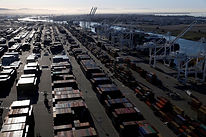
Beyond Oil: How the Middle East Conflict Is Rewiring Global Supply Chains, Food Security, and Technology Flows
The BV Team
The ongoing tensions in the Middle East are no longer confined to the familiar narrative of oil shocks. While energy markets remain highly sensitive, the deeper and more consequential impact is unfolding across global supply chains, food systems, and technology flows.
11 April 2026
High Turnout, Higher Stakes: What India’s Assembly Elections Reveal About a Shifting Political Mood
The BV Team
The recent assembly elections across Kerala, Assam, and Puducherry have delivered one clear message: voter participation is rising, and with it, the intensity of India’s democratic engagement.

11 April 2026
Deal or Deterrence? Trump’s Iran Warning Signals a Hard Reset in Global Power Play
The BV Team
A fresh warning from former U.S. President Donald Trump—threatening renewed military action if Iran fails to agree to what he calls a “real agreement”—has once again pushed the Middle East into the center of global strategic calculations.

11 April 2026
Talks Without Truce: Israel’s Strategic Gamble in Lebanon Signals a New War Doctrine
The BV Team
In a significant development that reflects the evolving dynamics of Middle Eastern conflict, Israel has indicated readiness to begin negotiations with Lebanon—but with a critical condition: no ceasefire will precede the talks

9 April 2026
Nuclear Pause or Power Play? Iran’s Enrichment Debate Signals a Larger Global Reset
The BV Team
A fresh wave of geopolitical tension has emerged after strong remarks from the United States suggesting that Iran must halt uranium enrichment entirely—or face consequences that could extend beyond conventional pressure.


