
IRGC Ascendancy: Iran’s Power Consolidation and the Coming Phase of Hardline Geopolitics
What we are witnessing inside Iran today is not a routine political adjustment—it is a structural takeover of the state by a security doctrine.

11 Apr 2026
The BV Team
What we are witnessing inside Iran today is not a routine political adjustment—it is a structural takeover of the state by a security doctrine. The growing dominance of the Islamic Revolutionary Guard Corps (IRGC) signals that Iran is transitioning from a hybrid ideological republic into a hardened, security-first power structure. This is not just about who governs Tehran; it is about how Iran will behave in the global system going forward.
And the answer is clear: more rigid, more strategic, and far less willing to bend.
For years, analysts described the IRGC as a “state within a state.” That description is now outdated. The reality is sharper—the IRGC is becoming the state itself.
This matters because military institutions think differently from political ones. Politicians negotiate to buy time and manage perception. Security establishments act to secure advantage and eliminate vulnerability. Once the balance tilts toward the latter, the entire national posture shifts.
Iran’s decision-making is now increasingly driven by threat perception rather than diplomatic calculus. That means every negotiation, every response, every silence will be measured not in terms of optics, but in terms of strategic gain.
This consolidation is not accidental—it is reactive.
Iran has faced sustained external pressure: sanctions, covert operations, regional pushback, and direct military threats. Internally, economic stress and public dissatisfaction have added another layer of instability. In such an environment, systems tend to centralize power in the hands of those who promise control.
The IRGC offers exactly that—discipline, speed, and a clear chain of command. From Tehran’s perspective, this is not radicalization; it is stabilization.
But stabilization for one actor often translates into escalation for others.
Here is the critical shift: if the IRGC is calling the shots, then the nature of negotiations with Iran changes fundamentally.
Earlier, there was space for ambiguity—diplomatic flexibility, phased commitments, tactical delays. That space is shrinking. A security-driven leadership does not negotiate to compromise; it negotiates to consolidate.
This means future talks—whether nuclear, regional, or economic—will be harder, sharper, and more transactional. There will be less patience for drawn-out frameworks and more insistence on clear outcomes.
And importantly, pressure tactics that worked earlier may now backfire. A hardened system absorbs pressure differently—it doesn’t necessarily concede; it recalibrates.
A stronger IRGC does not lead to inward focus—it leads to outward assertion.
Iran’s influence networks across Lebanon, Syria, Iraq, and Yemen are not side projects; they are strategic extensions of its deterrence architecture. With the IRGC more firmly in control, these networks are likely to become more coordinated and more active.
This raises the risk of multi-front tension. Not necessarily full-scale war, but sustained, calibrated pressure across different theatres. The objective will be to stretch adversaries, complicate responses, and maintain strategic depth.
In simple terms, the battlefield becomes wider, not narrower.
This shift is not contained within the Middle East—it travels.
Energy markets react first. Even the perception of instability around Iran impacts oil flows and pricing expectations. Then come the strategic adjustments—alliances tighten, military postures shift, and diplomatic messaging hardens.
But the deeper impact is psychological. A more assertive Iran forces global players to rethink assumptions. Engagement strategies that relied on gradual convergence now face a wall of strategic rigidity.
For countries like India, this creates a dual challenge. On one side, there is the need to secure energy and maintain regional balance. On the other, there is a growing imperative to reduce vulnerability to such chokepoint-driven disruptions.
The biggest takeaway from this transformation is simple but profound—process is no longer the driver, power is.
Diplomatic frameworks, negotiations, and agreements will still exist, but they will operate under the shadow of hard power. The side that controls escalation dominance will shape the outcome.
Iran, by consolidating power under the IRGC, is signaling that it is preparing for this new phase.
The rise of the IRGC is not just an internal Iranian story—it is a geopolitical signal. It tells us that the era of soft ambiguity in dealing with Iran is fading, replaced by a more defined, more assertive, and more uncompromising posture.
For the world, this means recalibration. For the region, it means heightened tension. And for any serious observer, it reinforces a fundamental truth—when security establishments take control, diplomacy does not disappear, but it changes character.
It becomes sharper, harder, and far less forgiving.
11 April 2026
The Jewish People: A Civilizational Journey of Faith, Exile, Endurance — and Its Deep Parallels with Sanatan Dharma
The BV Team
The history of the Jewish people stands as one of the most extraordinary civilizational narratives in human existence. For over three thousand years, they have endured exile, persecution, displacement, and systematic attempts at erasure—yet they have preserved a continuous identity rooted in faith, memory, and intellectual tradition. This continuity is not accidental; it is civilizational design.


11 April 2026
Peace Talks or Power Play? Why the Iran–US Engagement via Pakistan Signals a Deeper Strategic Game
The BV Team
The latest diplomatic movement—featuring U.S. Vice President JD Vance heading toward talks involving Iran, with Pakistan emerging as a key venue—may appear like a conventional attempt at de-escalation.


11 April 2026
Beyond Oil: How the Middle East Conflict Is Rewiring Global Supply Chains, Food Security, and Technology Flows
The BV Team
The ongoing tensions in the Middle East are no longer confined to the familiar narrative of oil shocks. While energy markets remain highly sensitive, the deeper and more consequential impact is unfolding across global supply chains, food systems, and technology flows.
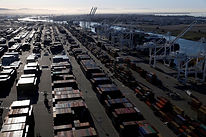
11 April 2026
High Turnout, Higher Stakes: What India’s Assembly Elections Reveal About a Shifting Political Mood
The BV Team
The recent assembly elections across Kerala, Assam, and Puducherry have delivered one clear message: voter participation is rising, and with it, the intensity of India’s democratic engagement.

11 April 2026
Deal or Deterrence? Trump’s Iran Warning Signals a Hard Reset in Global Power Play
The BV Team
A fresh warning from former U.S. President Donald Trump—threatening renewed military action if Iran fails to agree to what he calls a “real agreement”—has once again pushed the Middle East into the center of global strategic calculations.

11 April 2026
Talks Without Truce: Israel’s Strategic Gamble in Lebanon Signals a New War Doctrine
The BV Team
In a significant development that reflects the evolving dynamics of Middle Eastern conflict, Israel has indicated readiness to begin negotiations with Lebanon—but with a critical condition: no ceasefire will precede the talks

9 April 2026
Nuclear Pause or Power Play? Iran’s Enrichment Debate Signals a Larger Global Reset
The BV Team
A fresh wave of geopolitical tension has emerged after strong remarks from the United States suggesting that Iran must halt uranium enrichment entirely—or face consequences that could extend beyond conventional pressure.


