
Peace Talks or Power Play? Why the Iran–US Engagement via Pakistan Signals a Deeper Strategic Game
The latest diplomatic movement—featuring U.S. Vice President JD Vance heading toward talks involving Iran, with Pakistan emerging as a key venue—may appear like a conventional attempt at de-escalation.

11 Apr 2026
The BV Team
The latest diplomatic movement—featuring U.S. Vice President JD Vance heading toward talks involving Iran, with Pakistan emerging as a key venue—may appear like a conventional attempt at de-escalation. But beneath the surface, this is far from routine diplomacy. It is a high-stakes geopolitical maneuver unfolding in a region where every engagement carries layered strategic intent.
The warning issued to Iran—not to “play” the United States—reveals the tone of the engagement. This is not a negotiation built on trust; it is a negotiation framed by suspicion, leverage, and calculated signaling.
The choice of Pakistan as a venue is itself telling. Historically, Pakistan has positioned itself as a facilitator in regional dynamics, but its role has rarely been neutral. Its deep ties across different geopolitical axes—ranging from the United States to China and parts of the Islamic world—make it a complex intermediary.
Hosting such talks elevates Pakistan’s diplomatic visibility, but it also introduces uncertainty. Any engagement routed through a third party carries risks of interpretation, influence, and agenda-setting.
From a strategic lens, this is not just about location—it is about control. Who shapes the narrative, who filters the communication, and who benefits from the optics?
JD Vance’s caution to Iran is more than a diplomatic statement—it is a calibrated signal. It communicates that the United States is approaching the talks with a hardened posture, wary of prolonged negotiations that yield limited outcomes.
The emphasis is on clarity and commitment. The underlying message: ambiguity will not be tolerated, and any attempt to stretch the process without delivering results could trigger consequences.
This aligns with a broader shift in global diplomacy, where patience for incremental progress is diminishing. The focus is moving toward decisive outcomes, even if it means increasing pressure.
For Iran, the challenge is multifaceted. It must balance the need to engage with the imperative to maintain strategic autonomy. Historically, Iran has used time as a negotiating tool—extending discussions while preserving its core capabilities.
However, the current environment may limit that approach. Increased scrutiny, coupled with a more assertive counterpart, reduces the space for delay tactics.
Iran’s response will likely involve calibrated signaling—showing willingness to engage while safeguarding its strategic interests. But the margin for maneuver is narrower than before.
What makes this engagement particularly significant is the context in which it is occurring. Military deployments, strategic signaling, and regional tensions continue to form the backdrop.
This is diplomacy under pressure. Talks are not happening in isolation—they are unfolding alongside visible demonstrations of power. This dual-track approach—negotiation backed by deterrence—is becoming a defining feature of modern geopolitics.
It reflects a core principle: dialogue is most effective when supported by credible leverage.
The ripple effects of these talks extend well beyond the immediate participants. Energy markets are closely watching, as any breakthrough or breakdown could influence global supply dynamics.
Alliances are also being tested. Countries are reassessing their positions, weighing the benefits of alignment against the risks of entanglement.
For emerging powers like India, the situation underscores the importance of strategic flexibility. Engagement must be balanced with caution, ensuring that national interests remain insulated from external volatility.
At its core, this episode highlights a fundamental shift in how negotiations are conducted. They are no longer purely diplomatic exercises; they are strategic contests where perception, timing, and leverage play decisive roles.
The involvement of multiple actors, the choice of venue, and the tone of communication all point to a carefully orchestrated process where every move is calculated.
This is not about reaching an agreement quickly—it is about shaping the terms of any eventual outcome.
The upcoming talks involving the United States, Iran, and Pakistan represent more than an attempt at dialogue. They are a reflection of a changing geopolitical landscape, where diplomacy and power are deeply intertwined.
As the process unfolds, the key question is not just whether an agreement will be reached, but on whose terms. In this environment, success is not measured by the existence of a deal, but by the strategic advantage it delivers.
The world will be watching—not just for the outcome, but for the signals it sends about the future of global negotiations in an era defined by uncertainty and competition.
11 April 2026
The Jewish People: A Civilizational Journey of Faith, Exile, Endurance — and Its Deep Parallels with Sanatan Dharma
The BV Team
The history of the Jewish people stands as one of the most extraordinary civilizational narratives in human existence. For over three thousand years, they have endured exile, persecution, displacement, and systematic attempts at erasure—yet they have preserved a continuous identity rooted in faith, memory, and intellectual tradition. This continuity is not accidental; it is civilizational design.


11 April 2026
Peace Talks or Power Play? Why the Iran–US Engagement via Pakistan Signals a Deeper Strategic Game
The BV Team
The latest diplomatic movement—featuring U.S. Vice President JD Vance heading toward talks involving Iran, with Pakistan emerging as a key venue—may appear like a conventional attempt at de-escalation.


11 April 2026
Beyond Oil: How the Middle East Conflict Is Rewiring Global Supply Chains, Food Security, and Technology Flows
The BV Team
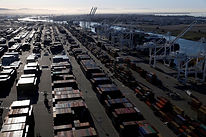
The ongoing tensions in the Middle East are no longer confined to the familiar narrative of oil shocks. While energy markets remain highly sensitive, the deeper and more consequential impact is unfolding across global supply chains, food systems, and technology flows.
11 April 2026
High Turnout, Higher Stakes: What India’s Assembly Elections Reveal About a Shifting Political Mood
The BV Team
The recent assembly elections across Kerala, Assam, and Puducherry have delivered one clear message: voter participation is rising, and with it, the intensity of India’s democratic engagement.

11 April 2026
Deal or Deterrence? Trump’s Iran Warning Signals a Hard Reset in Global Power Play
The BV Team
A fresh warning from former U.S. President Donald Trump—threatening renewed military action if Iran fails to agree to what he calls a “real agreement”—has once again pushed the Middle East into the center of global strategic calculations.

11 April 2026
Talks Without Truce: Israel’s Strategic Gamble in Lebanon Signals a New War Doctrine
The BV Team
In a significant development that reflects the evolving dynamics of Middle Eastern conflict, Israel has indicated readiness to begin negotiations with Lebanon—but with a critical condition: no ceasefire will precede the talks

9 April 2026
Nuclear Pause or Power Play? Iran’s Enrichment Debate Signals a Larger Global Reset
The BV Team
A fresh wave of geopolitical tension has emerged after strong remarks from the United States suggesting that Iran must halt uranium enrichment entirely—or face consequences that could extend beyond conventional pressure.


