
Citizenship, Accuracy, and Accountability: Why Data Integrity Is Becoming India’s Next Big Governance Test
India’s governance framework is entering a critical phase where data accuracy is no longer a technical issue—it is a matter of national integrity.

14 Apr 2026
The BV Team
India’s governance framework is entering a critical phase where data accuracy is no longer a technical issue—it is a matter of national integrity. Recent judicial observations around discrepancies in a state-level identification exercise have brought this issue into sharper focus. While the court has chosen a restrained approach in terms of intervention, its remarks highlight a deeper concern: how much margin of error is acceptable when dealing with something as fundamental as citizenship and identity?
At its core, the debate is not about one state or one process. It is about the credibility of systems that determine who is recognized as a legitimate citizen and who is not. In a country of India’s scale and diversity, even a small percentage of error can translate into thousands, if not millions, of individuals being wrongly categorized. That raises serious questions—not just administrative, but ethical and constitutional.
The judicial stance reflects a balancing act. On one hand, there is a recognition that large-scale exercises inevitably involve logistical challenges and human error. On the other, there is an implicit warning that such errors cannot be dismissed lightly, especially when they affect rights tied to identity, access, and belonging. The decision to avoid direct intervention may signal institutional caution, but the message is clear: accuracy cannot be compromised beyond a certain threshold.
From a governance perspective, this moment exposes a structural gap. India has rapidly digitized many of its administrative processes, but the robustness of underlying data validation mechanisms often varies across regions. When verification systems lack uniform standards or fail to integrate cross-checking layers, inconsistencies become inevitable. Over time, these inconsistencies erode trust in institutions.
There is also a political dimension that cannot be ignored. Identity-related exercises are inherently sensitive, often intersecting with debates around migration, demographics, and electoral dynamics. This makes the need for precision even more critical. Any perceived bias or error—whether intentional or accidental—can quickly escalate into a larger narrative of mistrust.
From a broader strategic lens, the issue goes beyond internal administration. In an era where nations are increasingly defined by their ability to manage data—be it population records, digital identities, or economic metrics—credibility becomes a form of power. Countries that maintain high standards of data integrity command greater confidence, both domestically and globally. Conversely, systems plagued by inaccuracies risk weakening their own institutional authority.
What stands out in this context is the need for a shift in mindset. Data collection and verification cannot be treated as routine bureaucratic exercises. They must be approached as high-stakes national processes, requiring rigorous checks, technological safeguards, and continuous auditing. This includes investing in better training, adopting advanced verification tools, and ensuring transparency at every stage.
At the same time, there is a need to address the human element. Errors are not always systemic; they can arise from individual lapses, outdated records, or misinterpretation of guidelines. Building accountability mechanisms—where mistakes are identified, corrected, and learned from—is essential to strengthening the overall system.
For India, the lesson is clear: scale cannot be an excuse for inaccuracy. If anything, scale demands higher standards. The larger the system, the greater the responsibility to ensure that every entry, every record, and every decision reflects fairness and precision.
Looking ahead, this episode could serve as a turning point. It offers an opportunity to rethink how identity-related data is managed, verified, and protected. By addressing these challenges proactively, India can not only strengthen its internal governance but also set a benchmark for other nations navigating similar complexities.
In the end, the question is not whether errors can be completely eliminated—they cannot. The real question is whether the system is robust enough to minimize them, correct them swiftly, and maintain the trust of the people it serves. In a democracy, that trust is the ultimate currency—and once eroded, it is far harder to rebuild than to preserve.
14 April 2026
Oil at $100: The Return of Energy Shock and the Hard Power Doctrine Behind It
The BV Team
The return of $100 oil is not just a market event—it is a geopolitical signal. It tells us that the world has entered a phase where energy is once again being weaponized, controlled, and strategically leveraged.


11 April 2026
The Jewish People: A Civilizational Journey of Faith, Exile, Endurance — and Its Deep Parallels with Sanatan Dharma
The BV Team
The history of the Jewish people stands as one of the most extraordinary civilizational narratives in human existence. For over three thousand years, they have endured exile, persecution, displacement, and systematic attempts at erasure—yet they have preserved a continuous identity rooted in faith, memory, and intellectual tradition. This continuity is not accidental; it is civilizational design.


11 April 2026
Peace Talks or Power Play? Why the Iran–US Engagement via Pakistan Signals a Deeper Strategic Game
The BV Team
The latest diplomatic movement—featuring U.S. Vice President JD Vance heading toward talks involving Iran, with Pakistan emerging as a key venue—may appear like a conventional attempt at de-escalation.


11 April 2026
Beyond Oil: How the Middle East Conflict Is Rewiring Global Supply Chains, Food Security, and Technology Flows
The BV Team
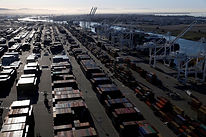
The ongoing tensions in the Middle East are no longer confined to the familiar narrative of oil shocks. While energy markets remain highly sensitive, the deeper and more consequential impact is unfolding across global supply chains, food systems, and technology flows.
11 April 2026
High Turnout, Higher Stakes: What India’s Assembly Elections Reveal About a Shifting Political Mood
The BV Team
The recent assembly elections across Kerala, Assam, and Puducherry have delivered one clear message: voter participation is rising, and with it, the intensity of India’s democratic engagement.

11 April 2026
Deal or Deterrence? Trump’s Iran Warning Signals a Hard Reset in Global Power Play
The BV Team
A fresh warning from former U.S. President Donald Trump—threatening renewed military action if Iran fails to agree to what he calls a “real agreement”—has once again pushed the Middle East into the center of global strategic calculations.

11 April 2026
Talks Without Truce: Israel’s Strategic Gamble in Lebanon Signals a New War Doctrine
The BV Team
In a significant development that reflects the evolving dynamics of Middle Eastern conflict, Israel has indicated readiness to begin negotiations with Lebanon—but with a critical condition: no ceasefire will precede the talks

9 April 2026
Nuclear Pause or Power Play? Iran’s Enrichment Debate Signals a Larger Global Reset
The BV Team
A fresh wave of geopolitical tension has emerged after strong remarks from the United States suggesting that Iran must halt uranium enrichment entirely—or face consequences that could extend beyond conventional pressure.


